

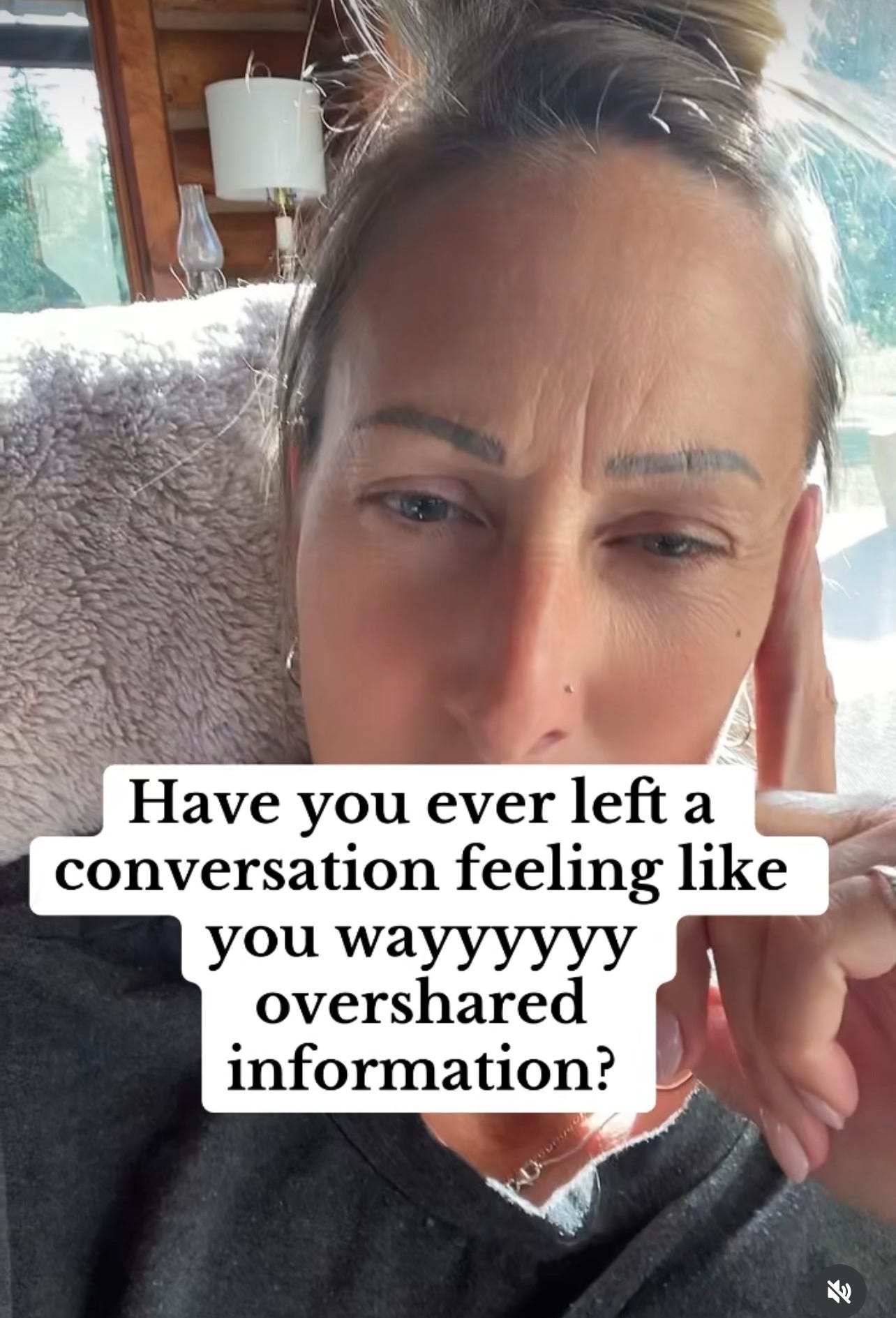
Have you ever left a conversation annoyed with yourself for disclosing so much?

Have you ever walked away from a conversation feeling exposed, like you gave away too much of yourself? You replay the interaction in your head, questioning, “Why did I tell them all of that? What were they thinking about me?” If this sounds familiar, you’re not alone.
https://youtube.com/shorts/B7dFP5f9ffk?si=Pbn8Md87WUzlm6RZ&utm_source=ZTQxO
This isn’t just a random habit—it’s a sign of something deeper. Over-sharing is often rooted in the need for validation and the desire to please others. It’s a survival mechanism we’ve learned, but one that’s keeping us stuck.
Over-sharing isn’t just about being talkative or open. It’s an unconscious way of seeking connection, approval, or reassurance. When we over-share, we’re often saying, “Please see me. Please understand me. Please tell me I’m enough.”
For many of us, this comes from a place of good intentions. We want others to feel close to us. We want them to understand our experiences, our struggles, and our hearts. But in the process, we often end up giving too much of ourselves to people who haven’t earned that level of vulnerability.
This isn’t to say vulnerability is bad—vulnerability is powerful. But when it’s done in the wrong context or with the wrong people, it can leave us feeling drained, and regretting talking about certain things.
At its core, over-sharing is often tied to two things: the need for validation and the desire to please others.
The catch is, this often works against us. Instead of creating real connection, it can make us feel vulnerable and even more disconnected when the other person doesn’t respond the way we hoped.
Another reason it’s hard to stop is because it’s automatic. Most of the time, we don’t even realize we’re doing it until it’s too late. We’re left replaying the conversation in our heads, feeling regret and shame.
If you’ve recognized yourself in this pattern, don’t worry. Over-sharing is something you can unlearn with self-awareness and intentional action. Here’s how you can start:
Pause Before You Speak
The next time you feel the urge to share something deeply personal, pause and ask yourself:
- “Why am I sharing this?”
- “What am I hoping to get from this?”
- “Is this person someone I trust with this level of vulnerability?”
This simple pause can help you become more intentional about what you share and with whom.
Remind yourself: “I don’t have to share my whole story to be worthy “.
When you start becoming aware of your over-sharing tendencies, you’re stepping into a powerful identity shift. You’re no longer seeking external validation to feel whole. You’re recognizing that your worth doesn’t depend on how much you reveal about yourself or how others perceive you.
Over-sharing isn’t a flaw—it’s a survival mechanism you developed to feel safe and seen. But it’s also a habit that no longer serves you. By becoming aware of this pattern, pausing to reflect, and building internal validation, you can break free from the cycle and step into a more empowered version of yourself.
Remember: your story is sacred, and not everyone deserves to hear it. Share intentionally, set boundaries, and trust that your worth isn’t tied to how much you reveal.
You are already enough.
Let me know your thoughts—have you struggled with over-sharing? What are you doing to break free? I’d love to hear your story.♥️
Much love xx
Angela
https://youtube.com/shorts/B7dFP5f9ffk?si=Pbn8Md87WUzlm6RZ&utm_source=ZTQxO